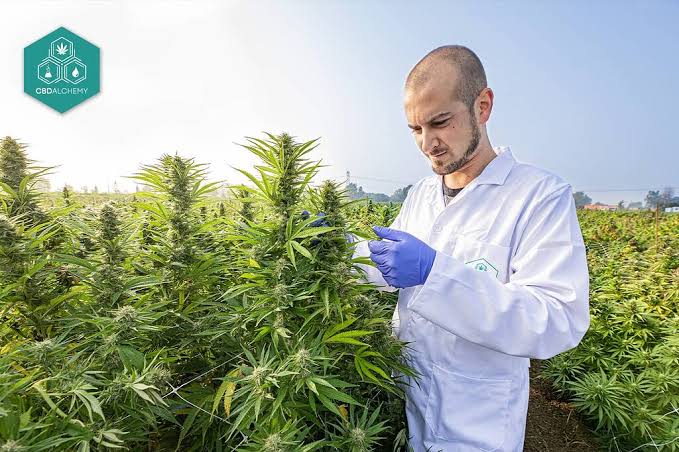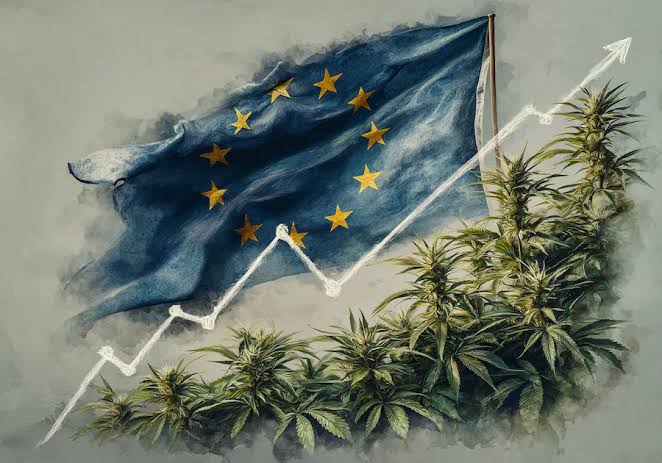
CBD weed looks like marijuana, smells like marijuana, and smokes like marijuana—but there is one critical difference: it will not get you high. CBD weed is cannabis flower cultivated from hemp genetics to express high levels of cannabidiol while keeping delta-9-tetrahydrocannabinol below the legal threshold of 0.2% or 0.3%, depending on the country. For millions of Europeans, it has become the answer to a simple desire: the ritual, flavor, and relaxation of cannabis without the legal jeopardy or psychoactive intensity of high-THC weed.
The term “CBD weed” is a colloquialism. Legally, it is hemp flower, not marijuana. But in appearance, aroma, and texture, the two are often indistinguishable to the naked eye. Modern European hemp genetics have been refined over the past decade to produce dense, trichome-frosted buds bursting with terpenes—myrcene, limonene, pinene, caryophyllene—that deliver complex flavor profiles ranging from citrus and pine to diesel and berries. This is not the industrial hemp of rope and textiles; this is boutique, indoor-grown flower cultivated with the same care as top-shelf THC cannabis.
The Legal Framework Across Europe
The legal status of CBD weed in Europe is built upon the EU’s Common Agricultural Policy, which defines hemp as Cannabis sativa L. containing no more than 0.2% or 0.3% THC. Plants meeting this standard are classified as agricultural products, not narcotics. This has opened the door for a flourishing market in smokable hemp flower, though the specifics vary significantly by country.
Switzerland leads the continent with the most generous threshold, allowing up to 1.0% THC in hemp flower. This creates a noticeably more pronounced entourage effect while remaining non-psychoactive for most users. Swiss CBD weed is widely regarded as some of the best in the world, with picturesque farms in the Alps producing organic, sun-grown flower.
Italy has embraced “cannabis light” with enthusiasm. Shops selling CBD flower are ubiquitous in cities like Rome, Milan, and Florence. The industry exploded after a 2016 law clarified that hemp with less than 0.2% THC was legal for industrial and commercial purposes, creating a grey area that entrepreneurs eagerly filled with smokable flower sold as “technical” or “collector’s” items.
Austria and the Czech Republic have well-established CBD flower markets, with both physical dispensaries and robust online retailers shipping domestically and across EU borders. In Vienna, Prague, and Brno, CBD shops are as common as health food stores, offering dozens of strains in glass jars ready for inspection.
France presents a more complicated picture. The country is Europe’s largest hemp producer, yet the sale of raw CBD flower has faced repeated legal challenges. A 2022 governmental decree attempted to ban the sale of smokable hemp flower entirely, only to be suspended by the Conseil d’État, France’s highest administrative court, which ruled the blanket ban disproportionate. The current situation remains fluid: CBD flower is widely sold in specialty shops as a “collection item” or “aroma product,” and enforcement varies. Consumers should check the latest local regulations.
The United Kingdom allows the sale of CBD oil, extracts, and edibles, but raw CBD flower is classified as a controlled substance and cannot legally be sold for consumption. Despite this, a significant grey market persists, and enforcement is inconsistent.
In most other EU countries, including Germany, Belgium, Poland, Spain, and Portugal, CBD flower is legal and sold openly, provided it meets the THC threshold and is labeled correctly. The critical takeaway is that CBD weed is legal in most of Europe, but the specific rules—THC limit, labeling requirements, and whether it can be sold for smoking—vary by jurisdiction.
The Entourage Effect Without the High
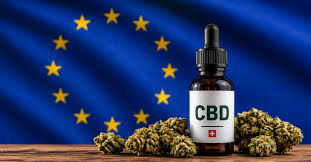 The appeal of CBD weed lies in what it offers rather than what it lacks. The absence of a psychoactive THC high does not mean the absence of effect. Full-spectrum CBD flower contains hundreds of cannabinoids, terpenes, and flavonoids that work synergistically in what researchers call the “entourage effect.”
Users commonly report a clear-headed physical relaxation, a reduction in background anxiety, a gentle easing of muscle tension, and an overall sense of calm. It is the cannabis experience minus the altered perception, the racing thoughts, or the couch-lock that high-THC weed can induce. For many, this makes CBD weed a functional daytime option, a social relaxant, or a way to unwind in the evening without compromising mental clarity the next morning.
Some users also employ CBD flower as a tobacco substitute, mixing it with rolling tobacco to reduce nicotine consumption, or using it pure as a non-addictive smoking alternative. The ritual of grinding, rolling, and smoking remains intact, which for many is as important as the chemical effect.
How to Buy Quality CBD Weed in Europe
The rapid growth of the CBD market has inevitably attracted low-quality producers and opportunists. Not all CBD weed is created equal, and knowing how to identify premium flower is essential.
Look for Indoor or Greenhouse Cultivation: The best European CBD weed is grown indoors or in controlled greenhouses, primarily in Switzerland, Italy, Austria, and Spain. These methods allow for precise control over light, humidity, and nutrients, producing dense, terpene-rich buds. Outdoor-grown flower can also be excellent if properly cultivated, but it is more susceptible to inconsistency.
Demand Lab Reports: Any reputable seller provides a third-party Certificate of Analysis for each batch. This document confirms cannabinoid content and screens for pesticides, heavy metals, mold, and microbial contamination. If a seller refuses to provide lab reports, take your money elsewhere.
Inspect the Flower: Quality CBD weed should be well-trimmed, properly cured, and sticky to the touch from preserved trichomes. The aroma should be fresh and pronounced—citrus, pine, earth, berries, or diesel notes are all good signs. A smell of hay, grass, or mustiness indicates poor curing or old stock. The buds should not crumble to dust or feel damp; they should have a slight spring when squeezed.
Buy from Reputable Sources: Established Swiss brands, Italian cannabis light collectives, Austrian online retailers, and Czech dispensaries with physical storefronts and transparent business practices are the safest bets. Avoid CBD flower sold in gas stations, tourist-trap kiosks, or unverifiable social media accounts.
Traveling with CBD Weed in Europe
A common question is whether one can travel with CBD weed across European borders. The answer is legally complex and practically risky. Even if your flower is compliant in both the departure and destination countries, the visual indistinguishability from illegal marijuana creates a high probability of confrontation with law enforcement. Police officers are not equipped to perform on-the-spot THC testing in most cases, and the burden of proof will fall on you. A lab report printed and carried with the product can help, but it is not a guaranteed shield. If traveling, the safest option is to buy locally at your destination rather than crossing borders with what looks exactly like an illegal substance.
The Future of CBD Weed in Europe
The CBD flower market continues to mature rapidly. Breeders are developing ever more sophisticated hemp genetics, pushing terpene expression, bag appeal, and cannabinoid diversity to new heights. Products like CBG-rich flower, CBD moon rocks, and full-spectrum hash are expanding the category. As the European Union moves toward clearer, harmonized regulations for hemp products, and as public familiarity with cannabis normalizes, CBD weed is likely to cement its place as the accessible, legal face of European cannabis culture. It may not get you high, but it has opened a door that prohibition kept shut for decades.